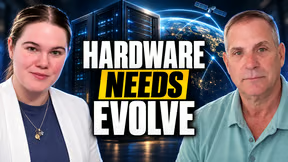
Video: AEC Group Execs on Education, Budgeting, and Addressing Vendor Changes With Customers

Katie Bavoso speaks with AEC Group’s CTO Brian Lesniakowski and CRO Ken Rindt on how the VAR/MSP builds trust with clients and vendors.

Written By
Katie Bavoso
Katie Bavoso
Feb 27, 2024
1 minute read

Transcription

hey Channel insiders welcome back for another episode of Channel Insider partner POV your source for untapped opportunities and unfiltered opinions in the it channel to help you make Better Business decisions I'm your host Katie boso today I'm joined by two guests from the solution provider aec group Chief technology officer Brian lesnak Kowski and chief Revenue Officer Ken rent the two shared with me how they Implement nextg technology for their customers despite variables and constraints as well as what aec group is looking for in a strategic vendor partnership welcome to both of you and thank you so much for joining me today the first question here is has got to be the easiest one I would say and that is what is aec group and what verticals do your customers typically operate in thanks Katie for having us um yeah aec group is a systems integrator uh we you know traditional VAR uh but we you know tend to take the VAR process from the sale of the material all the way through delivery and life cycle management for our customers long term we're not really vertically aligned um aec provides infrastructure Solutions so infrastructure would be common across you know pretty much any vertical um the verticals that we tend to work with are more specific just to the region we're in uh which would be healthc care and financial sector and legal uh but we work in manufacturing and highed and uh pretty much all the verticals other than the FED space we're also a maned service provider uh so that that's a relatively new area for aec um here probably in the last four or five years um but you know we do provide manage services to our customers as well Brian something that you told me in our first meeting is that you as a company are focused on Education First sales second can you kind of describe what exactly that means we're more of a strategic advisor to the customer so it's not usually that the customer comes to aec and works with their account manager and says hey I know the skew I want I know the product I want give me a price on it and send it over to me um it's typically us meeting with the customer over time identifying their business objectives and then allowing them to ask the the questions from a from a business standpoint and allowing us to align the technology requirements that uh that that might that objective may need to have met and and to do that um we typically introduce new products new Solutions things they may not be familiar with our goal is to try and make them aware of you know new strategies new technologies transitions that are occurring in the industry um so that they don't make a misstep and then have to regress uh you know 6 months 12 months down the road um so it's that guidance that we provide them that I think that really stands apart from some of our competitors as opposed to just being somebody that's a fulfillment shop it's a true consolidative approach we have a lot of smart Architects that are on the front end of the sales cycle that they continue to educate our customers and they see a great deal of value in it we tend to have regular Cadence with uh the our Insel base and where our reps will meet with them on a monthly quarterly basis to make sure that they're ahead of the game and we're staying on top of many of their needs as well so it's it's a it's a high touch approach from us but at the same time it's highly consultative and Ken what would you tack on to that what would you say your differentiators are as a business and how do you stand out from the competition our key differentiator is uh it's it's our smart guy for lack of a better term we've some amazing Architects that are on our pre-sales team that are subject matter experts in many areas and they also they have a breath of knowledge but also depth of knowledge of different vertical Stacks we make a significant investment in that team where we have a one toone sales engineer architect to sales rep ratio so that it's a highly consolidative approach that that brings a ton of value to the customers what else makes us stand apart how much we care about the customer and the results and I'd say that our customer service levels above and beyond what our competitors can bring customer first I mean we we work with over 60 manufacturers uh oems uh represent their products but we're not beholding to the OEM we're beholding to the customer so we really are um trying to provide them with guidance that isn't just echoing whatever the manufacturer is saying about the product and Brian when it comes to a customer perhaps approaching you with an idea of a specific solution or technology in mind that you know is going to be obsolete in 2 years how do you shift their focus to a different solution can you walk me through that conversation a good example would be antivirus and malware protection today is is obviously at the Forefront of everybody's mind say they're uh utilizing a a longstanding antivirus malware protection Suite um we try to make them aware that you know the Next Generation platforms are available and that they're different you know that they do uh identify zero day threats more rapidly they use machine learning they use artificial intelligence um if they're not taking advantage of that then you know they're basically leaving gaps uh and if the platform that they've adopted and utilized for years hasn't uh kind of evolved with the industry then we make them aware of that um and just as common I would say isn't a flaw in the platform but as much as you end up with technology spread in many instances we'll walk through with the customer and say you're paying for this product this product and this product we can put this in place that's going to check all those boxes plus have these additional features so it may be a net Z Z spend to the customer by the time they retire the existing products and the the you know ongoing maintenance and support that they're paying for them and adopt the new platform Brian when it comes to that conversation with your clients what's typically impacting their decisions is it budgets is it potentially misinformation when it comes to Trends or security what are some of the top things that you see impacting those decisions well the answer is yes so everything you just said um it always starts with budget I mean the the next customer we find that has an unlimited budget will be the first one with we've ever found they also recognize that they you know there there is an amount they're going to have to spend uh in particular with respect to security related uh functions um but we're seeing a lot of customers now doing transitions to cloud and and you know the apprehension there really is it's a new skill set um in many instances new technologies um so there's usually some apprehension associated with that and then they don't like to throw out things that they've already invested in you know an agreeable approach is not going to be to come in and say you need to scrap the thing you bought 12 months ago and throw it out because you know this is better and let's let's refresh it or let's renew it um so that tends to put the the road map functionality that we we provide for them into play which is working with them looking at next year's budget looking at the year after's goals um they may not necessarily set a fixed budget two years out but at least they know the spends coming uh and they understand what implications that's going to have on uh their existing infrastructure Ken can you build on that for me when it comes to talking about that road map with customers from a cro standpoint is there anything you would advise them to look into when it comes to budgeting prior to talking to aec group I think a lot of it comes down to more the the Cadence which they're going to have with their their partner with us in particular the the more that we're in front of them and the more of an opportunity we have to have a vision as to what their goals are what they're trying to accomplish the earlier on we can put in position the budget properly for there's technical debt that they've taken on that they're going to look to exhaust at some point that's part of it as well those are some of the proactive measures they could take on their own but including us in those conversations that have a better understanding of what they're trying to accomplish longer term puts them in a better position to budget properly over the last couple years here probably in the last five to seven years there's been a lot of uh change in the industry as far as the structure of some of the manufacturers uh some of them have gone private they've gone private Equity they've taken themselves off of the you know the the wheel that that the market provides and having to hit numbers and so on and so forth um you know the vmw just being acquired by broadcom is eliciting a lot of questions from from a lot of our customers who you know that's a that's a product that has saturated the industry and and they don't know exactly what their cost modeling is going to look like going forward um it's probably not going to be as as attractive as it was in the past so they want to see alternatives are there alternatives are there ways they can reduce their spend in areas now you brought up VMware and for those that are listening that don't know broadcom closed its acquisition of VMware earlier this year and they also announced the end of the vmw part of program as we know it Brian for you from a technology standpoint how is that something that you approach when you find out a massive vendor like that that you said is so ubiquitous across the industry what is the protocol if you have one that what does that look like when you have to say okay here's how we're going to approach this with our customers and here's what we're going to do yeah when somebody that ubiquitous changes uh it's significant yeah and it's kind of a see change depending on what the customers decide to do now uh BMW can modify that or the broadcom people can modify that by making the terms as attractive as they were before for what their pricing looks like um from my perspective it's being aware of what the alternatives are uh being aware of can you displace VMware with a uh with a hyperv with a nanx ah and if you do what are the drawbacks uh the know it's probably not going to be like for like they're they're not Apples to Apples product so you know it's walking through them with them and saying okay you're running Linux workloads you're running Windows workloads those workloads will transfer and they will run and they will run normally uh your ability to do live migrations will still work maybe it impacts your Dr strategy uh maybe your fundamental replication model was built around VMware replication so we'd have to walk through to make sure that that's going to be accommodated should you make a transition from say a VMware hypervisor to nanx ahv um it could be something associated with your virtual appliances um typically the functionality uh that most organizations use Falls in that kind of you know 90 percentile uh and all of them use them it's that extra 10 that usually is the differentiator that drives them to something like a VMware um and in third party support so you know if I'm running VMware and I'm running a bunch of Cisco virtual security appliances then I know that they were tested and validated on that platform if I adopt a different hypervisor I have to see whether or not those virtual appliances can be transitioned and run effectively because there's underlying Network functions and things that it depended on with respect to bware that may not be there in AHB walking customers through that and getting them to understand that it's not just as simple as looking at it from a price standpoint um there is a functionality and you know there may be some things that you have to change or deviate from the process that you used in the past um but once they're aware of those uh then they can make an educated decision as to whether they make that transition or whether they maintain status quo going from that you mentioned it you have to make the decision is that going to be something that you continue with or are you going to find a different vendor when it comes to something along the lines of such a big change in this space what do you look for in a vendor in in a situation like that when you need to switch over is there something that they can keep in mind the vendors that are out there listening right now who know that there is a gap being left behind is there anything that they can do to better secure your business the process that Ken and I usually go through from an aec perspective is is I evaluate the technology uh so I'm looking as to how the technology aligns with what the industry is doing U maybe it's something net new so if you know they've introduced some new feature or capability uh that stands out from the crowd then that merits being investigated so staying a breast of of what their Technologies offer uh in a competitive State and we break everything into solution categories so uh you know everything under a solution category there may be 10 15 vendors that we're watching in that space we don't adopt all of them uh you know if to get on our line card they have to not only only uh solve the challenges the customers present to them but they also have to work well with others uh because none of these things kind of work in a silo anymore they all have to you know they all have to complement one another and once I've said okay I believe in this technology I think it works well with our suite of products and will fit in the ecosystem that we try and you know present to our customers I take it to Ken and Ken then evaluates it more from uh you know is there a market for it and what's the strength of the business and and and I'll let him speak to that strength in the business is one thing but if their Channel first that that's very important to us if Brian vets it and he recognizes that it can address the needs of our customers and it's going to fit that it's up to me to basically figure out if that's a safe person to partner with need to trust the people that you're working with and with some of the stuff that has gone on recently with the Acquisitions whether it be private Equity coming in and stashing someone up or whether it be uh acquisition via you know from another public player in decimating and blowing up a Channel program uh creates a lack of trust in some areas so you know the alternatives are people that have a good track record that are partner partner Le partner first and truly want to embrace and engage with the channel and also have healthy Channel programs profitability is important as well let's be honest you know we're all in business to make money here and if you know if they if they're eroding the profitability moving forward they're they're going to be it's going to be less of a chance that we're going to want to double down on them and move forward with taking the market are there any trends that you're investing in this year that are going to become a part of your portfolio or going to work in there somehow with the solutions from the vendors you partner with whether that be AI whether that be machine learning is there anything that you are putting your focus and your dollars and effort into well both of what you just said uh Ai and machine learning although maybe not in the context that most people would think you know so you know whether somebody's looking to adopt something like co-pilot from from Microsoft uh you know that's that's going to be a big push in the industry you're going to see that become you know spread across and in almost ubiquitous almost like teams you know what we're seeing is a lot of challenge where you've got SAS delivered applications you've got on Prem applications you've got applications that are running in Cloud um where does the identity come from that's that's the first thing that everybody has to solve you know what's the deao identity provider um so platforms and products around identity and protection of that identity whether it be multiactor authentication or you know secondary ways for authenticating a user um and extending that into their application ecosystem you know so if they've got SAS apps they don't have to maintain credentials for every application the other thing is visibility um customers are looking for the ways to how do I get metrics off of the performance how do I compare it to yesterday um it might not be performance driven it might be security related but how do I get visibility across the Spectrum when everything's not sitting in my data center or in my server room now I've got things out on you know public Cloud I've got things in hosted environments um users have the ability to move data around put it on their laptop tops how do I protect the the corporate assets um how do I protect the user from themselves and then machine learning we would use that more from an automation standpoint you know especially as it relates to security I mean threats are are so rapid now that it's impossible for you do a signature match you have to look for you have to look for a threat because it's just not behaving the way it behaved yesterday you know so it's really an anomaly detection system human beings aren't good at that uh but machine learning is well something I'd love to know is is there a success story that you might be able to tell me in which aec group was able to bring a customer past their challenge in 2024 or in this case in the last calendar year the multinational uh organization all their it was either collocated down in the Sterling Virginia data center area or on public cloud in the European data centers uh so they had European Azure tenants they had European 365 uh they had some uh us-based and Us East they were held under an umbrella Corp and they not only had to spin out from that organization uh but they had to do it without any downtime and they were being managed from a uh managed services provider a n International managed services provider at the same time so we had to transition the support uh not only for their their it environment but also for their voice system so we had to cut uh cut them from Cloud to cloud from tenant to tenant uh from on Prem to cloud and move their entire voice system uh and accomplish all that within a 12-month window uh with limited or no downtime uh and you know we were able to facilitate that very well put and have you both caught up on your sleep since then sort of are there any strategic vendor Partners or solutions that you would like to shout out right now anybody that is offering whether it be support or just really great Tech we work very closely with the nanic team uh what they do and what they bringing to the table for customer they provide a lot of options um they're providing something that's relatively unique and that you can extend your on Prem cloud services to uh public cloud and and still maintain the same management layer the other one might surprise some people and because I don't think people think of them as innovating that much because they're just one of the Behemoth is Microsoft what they can provide today under their cloud services it's light years ahead of where we were 24 months ago 36 months ago we work with a security vendor called abnormal security that takes a different approach to email gateways uh protection um that doesn't displace the other vendors we work with like proof Point uh and Cisco in that area they just take a different tack to it in their Cloud only um so they they do a much more aggressive approach to blocking spam and unwanted email than say some of the other vendors do that differentiates them in the space that allows them to get on our line card because if we have a customer that that is a particular pain point for then it might be a good fit for them I'd like to Echo Brian's uh statements in regards to nut tanic though their Tech is phenomenal but in addition their Channel programs that they have put in place and they're ever evolving but they put a lot of uh specific programs in place for us to continue to grow and they care about the the partnership more so than just caring about their own profitability HP Aruba has been fantastic for us as well uh from a channel standpoint and there's a couple smaller players and new players that are on the that we we're starting to engage with specifically control up we're putting together a fantastic uh partner program as well and we're excited about engaging with them I would throw rubric in there as well um yeah they really differentiated themselves in the the data management uh space and it's really their recovery capabilities that's differentiated them another vendor that we think particularly interesting and and we've had it on the line card for a while but it's uh it's taken some time for the the the need to be exposed for customers is a is a platform called Veron now if I'm an IT buyer a CIO or a business who just needs your services where can I find you and how can I reach out to you you can find us online at www. aecg group.com K Brian thank you both so much for your time today I appreciate it and I hope you come back in the future thanks again to Ken and Brian for joining me today and thank you for watching or listening to this episode of Channel Insider partner POV we put out a new video and podcast every Thursday you can check those out on Channel insider.com or on our YouTube page at Channel Insider news and Trends you can also listen to our podcasts on your preferred podcast platform don't forget to like subscribe and follow wherever possible so you never miss an episode if you want to be on the show or you've got a question for me or one of my guests you can email me at partner poov Channel insider.com once again I'm Katie boso and I'll see you next time

This transcript was generated automatically from the video's captions and may contain errors.

Channel Insider content and product recommendations are editorially independent. We may make money when you click on links to our partners. Learn More

In this episode of Channel Insider: Partner POV, host Katie Bavoso speaks with AEC Group’s CTO Brian Lesniakowski and CRO Ken Rindt. Brian and Ken detail how they take client variables and concerns into consideration when approaching them about new technology, and how AEC Group prioritizes client education over making sales. Additionally, the team explains how vendors can earn the VAR’s trust in the wake of the end of the VMware partner program following it’s acquisition by Broadcom. And, what vendors are on the top of AEC Group’s list? Stay tuned to find out!

Katie Bavoso

Katie Bavoso is a 2017 Regional New England Emmy-nominated broadcaster with over a decade of professional content creation, production, hosting, and interviewing experience. Starting her career off in TV news, she pivoted to the IT channel to help connect vendors, solutions and services providers, and IT buyers through exciting video content and storytelling. Katie is now the host of Channel Insider: Partner POV, a video and podcast series shining a light on the most innovative solution providers of the IT channel.

Channel Insider Logo

Channel Insider combines news and technology recommendations to keep channel partners, value-added resellers, IT solution providers, MSPs, and SaaS providers informed on the changing IT landscape. These resources provide product comparisons, in-depth analysis of vendors, and interviews with subject matter experts to provide vendors with critical information for their operations.

Property of TechnologyAdvice. © 2026 TechnologyAdvice. All Rights Reserved

Advertiser Disclosure: Some of the products that appear on this site are from companies from which TechnologyAdvice receives compensation. This compensation may impact how and where products appear on this site including, for example, the order in which they appear. TechnologyAdvice does not include all companies or all types of products available in the marketplace.