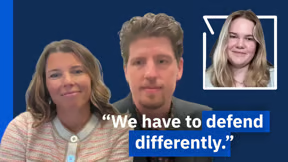
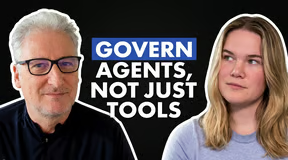
Hi, channel insiders. Welcome back to another episode of channel insider partner POV. Today we welcome back Nancy Henriquez. Uh she was on the podcast last in 2024. She rejoins me now for a conversation really about the channel writ large about her experience managing running owning MSP shops herself ultimately exited those businesses became a consultant a leadership coach and all things channel expertise so we dive into what MSP owners should know today to prepare for tomorrow whatever tomorrow might look like we talk a little bit about AI because of course we do and along the way we also talk about the personal side of professional business So, I hope you will enjoy the episode even half as much as I enjoy talking to Nancy.
And we will get right into the conversation. Thanks as always for watching and for listening. I am joined now by Nancy Henriquez. Nancy, thank you so much for taking some time. >> Thank you so much for having me, Victoria. It's great to see you. >> Yeah, same to you. So, I know you could be introduced by by many titles. The most recent being head of community over at MSP Unplugged, principal consultant at Civil Consulting [clears throat] Group, former MSP owner, book author, consultant.
I mean, I the list probably goes on. So, maybe it would be better actually if I flip it to you and and ask you how you like to introduce yourself to audiences. >> Yeah, absolutely. I I love that it's like a scroll of my resume, right? the latest thing is um head of community and uh co-host for MSP unplugged and uh really this role is a work of passion. It brings together everything else that I do in such a great way. Um, as you said, uh, principal consultant at Civil Consulting Group and, uh, we're a leadership and operational coaching firm for MSPs and, uh, beyond that, yeah, former MSP, two-time uh, I've exited two time I keep saying like exit and I'm like, I don't think that's an actual word, but >> you know, it's one of those things where it's like, how do you actually articulate that you've been there, done that multiple times on the MSP side and it's one of the things that um I continue to see, you know, where where else can I be of value and of service and so that that continues to add to to my resume there.
This will be a pretty wide ranging conversation. We'll dive a little bit more into your specific experiences and and how you're kind of bringing it all forth into roles, etc. But I do also want to take this opportunity to to pick your brain a bit about things in the channel. So maybe we'll start there. to your point just now, you've been there, done that, right? You took two businesses in the MSP space, ran them, exited them ultimately. I'm curious when you think about the kind of transitions that you saw the channel go through, walked through yourself, right?
That initial break fixed services evolution, the cloud conversations that started, and now we're in this new era of is AI going to change everything? Everything feels different. What does it mean for the channel? When you think about the ways that you kind of lived through the the former transitions that I highlighted, what lessons do you think MSPs can take from those waves and apply now to the AI of it all? Or do you think this is a a fundamentally different business evolution that that owners are now going through?
Yeah, that's a great question and I I have to continuously go back and and say this is the industrial revolution of our age, right? And we've seen it before. We've seen it time and time again. That's something that we're humans and so in our history, we tend to repeat things, right? And it's just a new UI over it, I would say, in in that aspect of it. So going from you know break fix to the managed services it was a a complete transformation on uh thought and how we would lead through that same thing when it came to cloud and then security.
So for me it's I always go back to the fundamentals it's it's the same fundamentals across the board and it's just a new wave of how we're doing things. And so in when you look at transformations we always tend to see the fear, the hype, the, you know, all of that comes up and everybody's, you know, oh my god, it's a race and how are we going to get there and is it going to completely change things? And at the end of the day, I always like to kind of take a step back and say, what does that actually mean in where we are in reality?
And then how are we going to take the necessary steps to move forward? So, it's the same but different. >> Diving into kind of what makes this feel different, right? I know the the technological piece obviously is is huge. AI isn't just new to the channel, it's it's new to everybody in many ways, right? So, when you think about if you were in the shoes of MSP owners, right? If you still kind of held your business and were leading an MSP, what would you kind of be focused on as a leader in terms of developing going back to the fundamentals etc. to take back to that team to set yourself up for success right now?
Do you think >> one of the things that I've always loved to do is start with your customer. Put yourself in your customer's shoes. I used to do an exercise with my team that I would say we need to ask a hundred questions. So really getting curious as to where our customers are. So before we would bring any kind of new service offering or adjust any of our processes to match that, I would always say what are the hundred questions we're going to get from our customers.
And that's where we start because that tells us a lot in terms of where they are, what their worries are, what they are looking forward to, what what is exciting them about uh this new thing, right? And especially when it comes to AI, you said it like this is more it's a sexier term in technology than anything else. So it's definitely wider uh acceptance is happening and the adoptability is absolutely crazy. And so because of that I always say like that's still that's the fundamental that you still go back to.
What does your customer want? Where are they at? And what are they looking forward to? Because if you can answer those questions ahead of time, if you can anticipate what they're going to look for, then you can build a service offering that is not just, you know, something that they're looking forward to, but something that's easily adoptable to them, something that makes sense to them. And the sales conversation completely changes in in that perspective as well because now they're feeling like okay you absolutely understand what it is that I want what I need and you also have the steps to you know bring that service to us which totally makes the comfortability aspect of it a gamecher because if you really think about it people are people and a lot of the concerns that are going to come up are definitely fear-based are definitely worrying about safety in in change and in transformation which that brings a lot of anxiety.
So if you can calm those fears by anticipating what it is that they want and need a total game changer. >> I'm curious too kind of almost taking the flip side of that conversation, right? I hear a lot from MSPs who go our customers are coming to us and saying we want AI and then we say okay what what do you want to accomplish with the AI? And it still seems that for many the goal is the AI and they haven't necessarily thought through use cases or practical adoption or what it might do to their businesses.
How would you advise MSPs who are trying to follow that framework right who are going I do sit with my customer I do want to get to know them. It seems like AI adoption is is still tracking far ahead maybe sometimes of of the practicalities. Do you think that that's just a an AI maturity conversation and we're just in the early stages of businesses being comfortable with the tech or or how do you kind of see that evolving I guess over the next few months and years? >> Yeah.
Oh, 100%. That that has to do with with the tech and how it's evolving. It's a lot of opportunities bringing them forward in that sense. part of I think the uncomfortability and the friction that is happening in in the space especially when it comes to the technologists you know versus the customers and the end users is the questions the applicability of the AI. So an enduser is thinking this is going to make my workload so much easier and I can jump into it immediately. the technologists are thinking, "Oh my god, what does this mean for security?
Uh what does this mean in having responsible use of it? Is it actually going to save you some time? You can't really trust it 100%." So it brings up a lot more questions on our end. Uh whereas it seems like end users are kind of diving in and just, you know, being thrown into the sea without learning to swim first. And we're like, "Wait, wait, wait. Let let's give some swimming lessons beforehand. Let us teach you how to survive before you drown in this massive world of AI and what what is actually capable.
But I think that that leads to so many opportunities for education, especially as the technologists to kind of slow everybody down and say where is this actually going to make an impact for your business? Because using AI for AI's sake doesn't really help if it doesn't actually move your business forward. If anything, it might set you back if you jump in without truly understanding where you can apply it and what and measure the impact that it will have.
Let's switch gears a little bit and talk more on the kind of exiting strategy. I know the last time that you were on Channel Insider Partner POV a couple years ago, you talked about this pretty in-depth with Katie at the time, but we've seen kind of since then the emergence and the prevalence of private equity groups coming into the channel, right? The consolidation amongst MSPs, the rise of this kind of platform concept taking hold. Do you think that the ways in which MSP owners should prepare for an exit are changing along with kind of the economics of the channel or to kind of use your your phrasing for earlier?
Are there still fundamentals that are just going to be true? In any case, >> I'm a big fan of fundamentals. Um, and so making sure that you are always prepared for exit. It's it's imperative not just because you know you want to exit your business but because what happens if a bus were to hit you know so it for me it's a matter of building to sell without having to get to that point unless you truly want to. As you mentioned I'm you know five year well you didn't mention but I did exit my business.
It's I'm coming up on my 5year anniversary of having exited and because of that there's been so much thought that I have uh been sitting in now and that's led me to realize there's moments where I definitely regret selling when I did uh where I can pinpoint the fact that I sold either you know I sold prematurely because of personal pressures because of fear in the sense of, you know, PE is coming, all this consolidation's happening, MSPs are getting larger, competition is getting harder, and so all of those different pressures led me to exit when I did.
And now I'm feeling like there's this resurgence of MSPs wanting to be independent and keeping equity as long as possible, which is great in the sense that there's a place for both, right? There's a place for those larger MSPs that are uh consolidating and becoming platforms and there's space for the independent MSPs who are the boots on the ground, you know, those that carry the trust of their customers and uh that have that personal relationship that no PE will be able to replace.
And so when it comes to those MSPs in particular, I tend to kind of teach them through my my lessons learned and saying, you know, having and being prepared for an exit is 100% a strength because then if something were to happen to you or if you get to a point where you can exit at a good point and you just find that to be advantageous for you where you are personally in your life, then absolutely you're ready to do it and you can maximize the effort and everything that you've poured into this business as much as possible.
Whereas if you're not prepared for it, if you haven't done the work in order to be at a a good point to exit and something were to happen or uh you burn out, right? Like it leads to a totally different exit than what you would have if you were prepared originally. You touched in there, I think, on on something that we don't always talk much about in the channel, so to speak, which is the personal side to all of this, right? There's the business and the technology, but also these are are people who in many ways have poured their life into running and and managing this business who, to your point, are burnt out or are approaching burnout, right? or who are just like, I've always done this a certain way and now it feels like everything's different or at least my vendors seem to be telling me that everything is different and I should be operating differently.
Could you speak a little to kind of how you've over the years managed the personal end of professional life and and how you encourage others in the space to think about that side of things in the same way maybe that they they think about their businesses so seriously? Lately, I have learned that it's always uh harder to go internal uh to listen to your inner voice more than the louder and you know voices that are coming from the industry that are coming from peers uh and things like that.
And so one of the things that I have learned is what carries me through in every aspect is really truly understanding my purpose and what connects me to that. For me it's been a journey to define it, to understand it, and to truly embody it. Because once I really truly defined it, it kind of clicked and it was like ah this makes sense for like my entire life my and in my career. It makes sense why I do what I do. And that sense of purpose kind of uh sets a completely different direction and trajectory into the energy that you bring to the work you do.
It changes conversations. It it's just different in such other way. And it also allows you or allowed me to come back internally and to say why am I doing this? Uh or I'm hearing all this noise outside of me, but how does that actually apply to me and what it is that I'm here to do? I think that we're all placed on this earth to do something. And really truly understanding that will propel you in so many other ways, especially those days that are hard.
Especially the days where you're feeling like why am I doing this? Being able to come back and say no. Even though the industry is saying this, I think this or I feel this. And that within itself changes how you feel in terms of burnout, in terms of fulfillment, in terms of why you do what you do. And so that that alone I think is is huge. um it's a huge difference in how you balance everything else out. >> I know too we touched on your experience, your varied experience earlier in in this episode, but you have also kind of seen the MSP relationship from the vendor side of the channel from the MSP side obviously and and now in the work you do in consulting and with MSP unplugged kind of as a a community large approach.
I'm curious when you think about why you kind of continue to stay in the channel and what keeps you here and and keeps you focused on this space, what is it that that drives you right now? So, I started in this industry right out of high school. I was 18 years old, impressionable, and I feel I've grown up in this industry. I've literally been in it for more than half of my life. And so when I think about my journey in it, everything that I have experienced in it, the success that I have experienced, just as much as the challenges that I've gone through and have grown past, I can't help but to feel there's nothing truly innately special about me.
I was just brave enough to look at change and say, "Okay, let's do this." And so it's something that uh if I can grow past anxiety, if I can grow past fear um in order to reach growth in ways that I could never have imagined, I know that it's possible for others. And so I go back to my purpose. Uh my purpose is literally to build something greater than myself, to help those in need. And when I can apply my experience to that, that's where I see I can have much greater impact if I can just share my story.
If I can share my experience and the fact that I have been there, I have done it. And I'm not going to ask of somebody something that I haven't done myself. So, if I've pushed past these fears, if I've overcome them, so can you in order to really and truly get to your purpose and and your potential, right? Reach your potential. Especially if it's something that is a whisper in you that you know you have and that you want to reach, you just maybe don't know how to unlock that yet.
And so, that's something that for me, it just brings me back into the industry over and over again. I see so many people and I talk to so many people that I recognize myself in from several years ago. And so I'm like, how can I help? How can I help? How can I uh add value? How can I serve? And so that's really truly what keeps me coming back. Can't stay away. >> I feel like many people in the channel have a I don't know. I stumbled in it 20 years ago and then I never left story.
I think it's it's pretty common. Yeah, exactly. >> I guess now maybe we'll we'll switch gears a little and we'll talk about looking forward, right? We started this conversation with kind of looking back on the various evolutions that the channel has kind of always worked through and always evolved through. Now that we're kind of in this AI era, to to use an overused term, where do you think MSPs have have real opportunity to evolve and grow again in ways that ultimately support end users?
And and what are you kind of watching, whether it's AI or whether it's something that maybe we're not talking about as much because of AI that gets you really excited for what the channel can continue to deliver into the future. So, I've always noticed a trend when it comes to what's happening on the enterprise side of things and how that's going to eventually be brought into the small business world where most MSPs sit. And a few years ago when AI started to really take hold, especially on the enterprise side, I started to see these large companies really start merging their HR departments with their IT departments.
And I said to myself, huh, that is interesting [snorts] because the people that manage technology today will end up being the people that manage people. And so with AI, I really don't think that it's about the technology. I think that it's empowering people. And so because of that, it's bringing this opportunity for MSPs to really now work on some skills that are probably the hardest for us, uh, especially when it comes to to managing people. But [snorts] this is where it's going, I think.
Um, now especially with AI agents being able to hold tasks and hold roles in companies, it really is an opportunity for an MSP to say, "Wait, how can I build an agent to assist and to do the hard work or the work that we don't want to do for our employees, for our small businesses, for our customers? Where can we add in employees that don't turn off?" So that we can also help the people that are working these roles in a way where now they can do more creative work where they can do um you know focus on the people aspect of things and really start to build more holistic environments in our worlds without the burnout that comes with doing the actual work.
So I think that's where we're going. I think that's where MSPs really need to pay attention to in the sense of where can I build in an agent to help alleviate some of the pain that our customers are feeling within their business operations. And really that's I think that's where we're going. >> The ways in which AI adoption has changed the industry are you know massive and we could probably spend the whole conversation just talking about those. But I am noticing too it's bringing a whole new wave of companies from startups to large companies kind of into the channel motion targeting MSPs and resellers in new ways or just you know in ways that are new to those companies at least.
I mean we've covered Anthropic and OpenAI to give the two big examples coming into the channel right but even some of the the other startups who are noticing what the channel can provide in terms of scale for their products. when you were in the MSP seat, when you talk to MSPs now who are evaluating vendor relationships, thinking about the tools that you wanted to bring into the stack to ultimately support your customers, how did you think through that and when did you place bets on companies that were maybe new to people versus the more established vendors that were more familiar? >> I have to go back to the hundred questions of of the customers uh that you ask your customers, right? and um really coming at this from the customer perspective.
What are they going to ask me for? What standards are they going to apply to me that I have to now make sure that the vendors I work with also apply? On top of that, I also look at culture. How do you treat your employees? Because that's going to say a lot about how your employees treat me when they deal with me and how I can carry that over to my customers. So I I look at it in that lens where if my customer were to call that vendor directly, what would that relationship look like?
Are they going to be someone that promotes me and that is an advocate for me as well as you know taking care of the customer or is there going to be friction in that relationship? And then on top of that I I look at it in the sense of if I operate my business in a certain way, does that align with how that vendor operates? So, it's multiaceted in in how I look at it. But, it's it's one of those where it really truly has to be about fit and alignment.
If there isn't an alignment or if there's any kind of friction in between, you better believe that that's going to cause friction with you and your customer. And so removing that as much as possible ahead of time when you're asking the questions, when you're doing the demos, sit, you know, in the seat of your customer, ask the questions that they would because ultimately speaking, you, the person in the middle, are going to have to answer for that.
And the blame game doesn't look good for anybody. So, you know, being proactive about that and making sure that there's an alignment ahead of time, it's something that I think is is huge when it comes to making those decisions and deciding who's going to be in your corner. You know, if you're assembling the Avengers, what are the strengths that they're each going to bring and how are they going to work together? We've seen in the movies once the Avengers start fighting, it doesn't help anybody.
So that's that's something that for me I that's where I start and um it's a process a due diligence that is rinse and repeat because you know things change especially if leadership changes or as things change within the industry you have to continuously be looking at your vendors with that same lens over and over again. >> What would make you and I'm not asking for specific names or or anything of the sort, right? But what would make you kind of get to a point where you said, you know, even if kind of ripping and replacing this is going to be really difficult, I need to go seek an alternative.
This is no longer working for the relationships that you maybe had established at one point in that framework that we're providing value. >> I'm a huge fan of the saying, know when to exit. Um, and that applies to a business, to a relationship, um, you name it, right? So the moment that you start to feel a drift in alignment, uh that is the moment that you start to ask the vendors why why is this happening? Uh what is going to be the the fix? If there is a fix, where are you taking this?
Because if not, I'm going to have to make a different decision because for me and my customer, alignment is everything. And so that's where I start to look at um especially when it comes to the friction that you're going to create. If there's anything that is going to cause some of that um immediately starting to look at when do we need to exit, at what point? Because it's going to cost you a lot more to continue uh than it is to rip and replace at a point where you start to see some of that impact.
If you wait too long, the losses could be a lot more damaging than just the cost of ripping and replacing because at the end of the day, especially for MSPs, it's your reputation. It's, you know, how you are seen in your neighborhood in in your local community, and that is everything. I think that that's something that a lot of vendors don't necessarily look at or think about, but as the MSP, you're holding the bag when it comes to your reputation and how you're known within your community.
So, how awkward would it be if you know you you allow a vendor to come in literally in the middle of the relationship that you have with your neighbor and you're walking over there and like sorry, you know, like you don't want to walk in in that discomfort. So, better to really know if there's any drift within that alignment, start to address it as soon as possible. >> I think you touched on this and we talk about this a lot at channel shows and things like that that this is an industry, a space that's built on trust and built on this concept of relationship between MSP and customer, between MSP and and vendor and sometimes even just between MSP and MSP. in a a world where I think increasingly we talk about agents taking on human work, right?
Or we think about the ways that AI can step in on some of these processes. To you, where does that balance start to fall between what you still want a person to kind of be able to to manage and to hold versus what you think ultimately agentic AI will unlock for MSPs? >> Repetitive tasks. um if they're repetitive tasks, an AI could probably do it. Um they don't even need eyes to do it. You know, like humans, we say we can do it with our eyes closed.
AI doesn't have eyes. They don't even need it. So repetitive tasks for sure is is where I think it starts beyond that. um really thinking about if somebody were to do these things for me and I I with the co with the MSPs that I coach, we're constantly looking at delegation. So really thinking about how can you delegate tasks that free you up to do what you do best, where your strengths are, what you enjoy doing. So if you enjoy the more technical side, if you enjoy the problem solving aspect of it, how can you and where can you free up your time? [snorts] And previously the answer was, you know, hire an assistant, hire a level one technician, right?
Hire, you know, hire more people. And now it really is more so of what are those repeatable tasks, the tasks that you don't need to babysit. Right now I have an AI that manages my calendar. I don't need to do that anymore. I don't need to make an appointment for myself in that way. Minutes really that an AI is now taking over. But that's where it starts. and then continuing to evaluate and audit your time and what you do so that you can delegate these tasks in in other areas whether that is to another human that is more capable or has the capacity for it uh or if it's an AI agent that is able to deliver the same results and outcomes as opposed to you having to spend that time and it all goes back to literally freeing yourself up to think ultimately speaking like that is where we are the most valuable uh where an AI cannot replace us in that aspect.
So in thinking time I can't express how valuable and how important that is because not only does it give you time to think about where am I going and what it is it that I want to do but it starts to unlock things that you hadn't even thought of obviously because you need time to think. I'm curious too as we kind of start to to wrap our time together, Nancy, right, with all of this in mind, with all of your background in mind with the conversation we've had about AI and human kind of working together moving forward for anyone that maybe is just starting, right?
And I know increasingly it seems like we cover the people who are exiting and and have those conversations, right? But there are probably people out there who are like, I'm going to start an MSP for whatever reason they decide to do that. If you were that person right now, right, who was just getting into the channel, who was just getting into what this all means, where would you want to see somebody start to set themselves up for success, but also to kind of honor what a good, for lack of a better word, MSP provides to customers. >> Yeah, I I would say start with clarity.
A lot of times, uh, we're I say we're accidental entrepreneurs. uh we're driven to start an MSP because we want to help somebody and because of that it's so easy to fall into I can help everybody and anybody and really if you start with clarity and you start understanding with what your purpose is uh you can also define who it is that you truly want to help which that leads to fulfillment in your day-to-day that leads to talking to the right customers.
So now your marketing and your sales messages become totally different than if you were to walk in without having some of that clarity. So I would say start there. The next step is find some friends. Uh you know find a community because it it's so true the adage that is said you go far alone but when you're with friends you can go even further and it's it's 100% true. I would not be where I am today if it wasn't for uh building a community when I did and having mentors, coaches um and other experts around me that helped to guide me along the way.
So that's two things that I would say. Yeah. And then I'll ask for those who are maybe feeling like they're at a a crossroads or a midpoint where they've started, they've gotten to a certain threshold or milestone. And I know that number is different for people, but they're at where they wanted their midpoint threshold to be and they're looking around at the AI ways that things are changing with AI or they're looking at security or or any of the other evolutions that have occurred and going, do I double down and stay?
Do I think about an exit? Can I do both somehow? What is your advice for that kind of middle ground person who got as far as they got and now is trying to figure out what's next? It's interesting because um you would think that the advice would be different um because they're at different points, but what I've come to realize is that whether you are in a position of starting something or if you're in the middle of something trying to decide where to go, you are in the middle of transformation.
And what the first step is especially when you are in the beginning of transformation is clarity. Uh, so I would say I would go right back to to that. Get really clear as to where you are, who you are, and who you want to help because that will open up the doors to uh those next steps. Uh, and so that's, you know, fundamentals, right? Go back to the fundamentals in in that way. And transformation isn't easy. Um, and most of us don't realize how often we are in the middle of a transformation.
So if you're in the middle of it and asking what next, you are right back at the beginning if you truly think about it. So clarity is everything. And then Nancy, maybe we'll we'll kind of end on one last question, which is you've been in all three stages, right? As we've said, you started something, you were in the middle of something, you exited something, and you're still in many ways kind of in the same community and in the same channel that you were at any point in those.
So, what excites you about the work that you'll continue to do moving forward in in the roles you're in and and what kind of does the rest of of 26 look like for Nancy? >> As I said, my purpose is to build something greater than myself to help those in need. Uh whether that is to an end user, whether it's to an MSP, uh in whatever way that is, my job, my responsibility is to fulfill that purpose. And so that's what I will be doing uh for the rest of 2026.
Uh I do have a few things up my sleeve. I can't really announce yet, but maybe we'll have another conversation about that. I've got definitely some uh events coming up uh with MSP Unplugged. Uh we have TechCon Unplugged coming up in September. And um I'll be uh also doing some speaking on the road and and talking about my book. So, uh, some of that promoting the the book in in some ways, but more so just wanting to be on the ground level and talk to as many MSPs as I can, help out within the community, and just truly serve um those that that have a need.
Uh, and so that's that's really where I'm at. So, for those who maybe have heard that last cliffhanger and and want to keep tuned on on what you've got coming out later this year or who have questions for you and in the various roles that you serve people to your point, where can people go to find you? >> Yeah, easiest place is um my website, nancy henriquez.com. I know the last name is a little hard to to spell out, but other than that, find me on LinkedIn and in the MSP Unplugged community. >> Thank you, Nancy, again so much for joining us today.
They really appreciate all the time you spent. >> Thank you so much, Victoria. This was fun. >> And if you would like to see more on Channel Insiders, news, events, coverage, and more, head to channelinsider.com or you can find us on all of the social platforms that you would find anybody else these days. Thanks so much. >>
This transcript was generated automatically from the
video's captions and may contain errors.