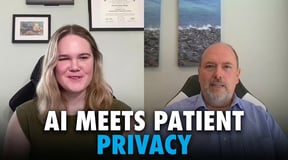
Hey channel insiders, welcome back to channel insider partner POV. I'm your host Katie Bavoso and today I'm speaking with the dynamic husband and wife duo behind the 20 MSP, a founderowned platform MSP with 38 acquired managed services businesses rolling up under the brand and no private equity backing. CEO Tim Conl and CMO Crystal Con join me to discuss their unique M&A strategy and its influence on the channel. I'd now like to welcome my very special guests today.
We have Tim Conl, CEO of the 20 MSP and Crystal Conl, CMO of the 20 MSP. Welcome folks. Are you in the same building today? We are. We are different offices though. You've got offices all over the place. Uh, I just found out that I'm near one, so I could easily go and stop by and say hello. But welcome to the show and thank you so much for being on it. And I do have to point out for those watching, I won't bury this. You are married. You're not related.
You're you're married with the same last name. So it's lucky. Very lucky you, sir. Yes. Tim, as you told me in our discovery call, you are one of the only nonPE backed MSP platforms out there. Can you describe the 20 MSP to me and kind of give me just a background of why you started this and how long you've been in the market? The 20 MSP is really an offshoot of my original IT company. Back then there was no MSPs but I had a company called Roland Technology Group.
And so the the first rebrand or roll up to start with was my IT company and then after that we rolled up I think next month will be the 39th MSP. Oh my gosh. We are the largest founder MSP where founder still owns the majority of the MSP and not a PE firm. I should also point out there's there's two arms here. There's the 20 MSP and the 20. So Crystal, can you explain what those two are because they're different but the same. So what are they and how do they relate to each other?
Absolutely. So Tim talked about the 20 MSP. That is our managed service provider. We have offices in almost 30 states now and we continue to roll up MSPs into that. So we are large national MSP. The 20 MSP as a group is basically a co-op for MSPs that have come together to grow and scale. So the model was built upon Tim's success in building his MSP, the lessons he learned and basically the pillars that he found you need to be successful in building an MSP.
So we built that here for MSPs to come together, like I said, to grow and scale. And I don't like calling it an easy button for MSPs, but that's essentially what it is. is we give them the processes that they need to grow. A lot of reasons behind it, right? So, if you look at a typical P firm, they they just buy IT companies is what they do and they buy a really big one. They call that the platform and then they bolt other MSPs alongside it, which means you don't really know culture.
You really don't know the company. You do due diligence. Due diligence being financial typically you do some soft who are the people who are the players at leadership level but you really don't know what you bought as far as company take financials out you really don't know what you bought until after you bought it that's when you find all the skeletons. So the tw the 20 was built to where you have a group so people come into the group and then they line up.
In other words we all standardize. We do things all the same way. If it's important that you do that because all of a sudden if you do everything the same way, I can have a member MSP that has a really big onboarding, they can reach into the group and at consumption say, "Hey, we need three people to help us." Well, when you do everything the exact same way, you can take any of about the,200 employees across the US and they do things exactly the same.
They document the same way. They onboard the same way. They onboard the same tools, the same RMM, the same PSA. They build the same way. They price the same way. Same deal. Sell the same way. Contracts. The really cool thing about that too is that's what has created the pipeline for our acquisition. So these are MSPs who are part of our group. They're already lined up to the way we're doing things before they roll up. And so it makes for a really, really smooth integration process with low attrition.
You know their culture. you know everything about them when you buy them. So you've literally the failure rate has been zero on 38 acquisitions. That's unheard of. But it's it's because we built it this way on purpose. Uh I hate friction. I hate friction with people because I love people. And I mean you meet somebody who enjoys friction by the way or at least somebody who admits to it. I hate you say this. Meet some of the MSPs out there. They love friction.
They don't know it. They love friction. But but it was a way to remove all the bad characteristics of buying an MSP. Uh attrition. A typical U typical P firm buys, they'll lose somewhere between 15 and 25% of the customers. Why? Because they go in, we bought the company, we do things different. They have to redo all the tools in there if they're not on the same tool set. There are so many things that you have to do where a typical P firm buys a company and integrates it maybe 50 60 70% over the over six, seven, eight months.
We literally go from buy it 60 days later everything's done. The really cool piece throughout this too is the talent that we acquire through that. So we're bringing on all of these MSP owners and their employees and we're putting them in a place where they can really work in their magic. So they go from wearing all the hats in their MSP to being in a specialized role that is what they want to do, what they're passionate about, and what they're good at.
And so it's really um just given us an incredible opportunity with talent that I don't know that we could have gone out and recruited. And talk to me about that recruitment process. Obviously, not everybody is going to make the cut. That's just kind of how the world works. You have to be selective. What makes an ideal candidate for somebody that's going to be a part of the 20 MSP? And then how does that process work? It's funny because we we know most everything about the MSP.
So when we talk about process, it's just something that kind of happens over time. Mhm. And then obviously size, the people, the culture, all those things make a really big difference to us. So if we're going to buy an MSP, we want them to look like us. We want them to act like us. Uh we want them to be on the same tools and all the other stuff that goes with it because it just makes it easy. But not just for us, for the customer. So if if I went back to what I was saying about attrition, when a P firm buys an IT company, they're going to lose 15 to 25% of their customers.
This is where earnout comes from from, by the way. Uh earnout is okay, if you keep all your customers, you get another chunk of money down the road, right? Uh because they know they're going to lose 15 to 25% of the customers. With us, we have natural attrition across every single company we've bought. It's been less than 5%. And we don't do earnouts. And we don't do earnouts. We don't have to. Now, I know at the top of the year, you acquired another MSP.
Which What number is that? 38 or 39? 38. 38. Yeah. 3. Thank goodness for you, Crystal. You get it. You You get the star for answering first. And the visionary. We have everyone else for the details. Yeah. Yeah. Yeah. That's the cool thing about the people. All the people we're big on working in your magic. In other words, what you're incredible at because everything else you do substandard to your magic. Ego free zone, right? I mean, I'm a visionary.
I know my magic. So, we never cross lanes and I'm over there telling marketing this is how you really should do it because I really don't know. Uh, and it's kind of across the company the company that way. But it's because you put people in their magic and it just works. I think we have eight, nine, ten patents right now on products. Yeah. Can you talk a little bit more about those? Necessity the mother is the mother of all inventions. Right. Right.
So if you look at the MSP space as a whole, think of the MGM hack or the Caesar's hack. The MGM breach cost over $und00 million. The Caesar breach cost over 30 million. How did both of those happen? It happened by somebody picking the phone up, looking at LinkedIn and and finding a really high up person in the company and then calling support support desk answers and let's just call it John Smith. Hey, this is John Smith with MGM. They plug that into their their ticketing system.
Oh, wow. He's important. And they gave him the keys to the kingdom. Here's the question. How' they know who was on the phone? It was just somebody saying John Smith. So I created a double blind human verification system. We use it here. Uh no one gets support here without being verified as as that human being. And so it's it's appless. It's it has no software to it on either end. So you can't circumvent the system. Uh about two and a half% of all calls that come into our help desk are not the people they claim to be.
We catch them. Really? This this tool that I have a patent on would have would have saved MGM over 100 million. Would have saved Caesars over 30 million. Biggest hole in the industry right now. By the way, if you just people calling. Well, yeah, because think about it. If your only check and balance is, okay, I'm going to call support and all I have to have is a name and a company name. Okay, it's in it's in the PA. It's it's in my ticketing system.
John Smith with XYZ company. What support do? They they help people. The problem is you don't know who's on the phone. And it happens all the time. It is the Well, I don't want to say no, I will say it's the easiest way to circumvent. So when somebody tells me, oh yeah, we're really really serious about security as a company. An MSP says this, it's the first thing I ask them. a client that says, "I am super serious about security." It's the first story I tell them, the MGM and the Caesars hack, and then how we how we how we fix that.
I'll even go as far to say if any customer gives me 48 hours and a waiver and they use any outsourced it, I'll almost bet I can be in their network within 48 hours with just with just a phone call. Crystal, when you're telling these stories, when you're kind of trying to explain to whether it be customers, to your vendor partners, or to the greater community at large, when you're telling these stories, do you turn to those to be able to explain the value that MSP that the 20 MSP presents, or how do you tell the story of what you provide as a value?
And and this is the reason I'm asking that for any audience member that is tuning in and going, I have never heard of the channel before. I don't understand that there is somebody that often sits between the vendor and the customer. How do you leverage those success stories that Tim was just talking about to be able to tell those stories on a wider scale so that you can help them help anybody coming in and taking a look at you and wondering who you are to explain the value that you present.
So we do we incorporate those stories into essentially all of our marketing. Um I find that that's what is really powerful because it's authentic and it's real. Um, you know, anyone can get out there and talk about how great their company is and hear our products and services, but incorporating those real stories like Tim talked about here, but also with our members with success stories. That's a big big part of our marketing. I also want to talk about success stories very badly.
That's one of my favorite things that I get to speak about on this show. Is there one that sticks out to you? And I I almost when I think about you telling me success stories, I obviously know you have a ton and I know that they're also coming from across the country. So when you pick one that really represents how you operate across the board, whether that be with a specific one of your your MSP offices or with a customer, what's a success story that comes to mind for you that you really like to hang your hat on?
I think Tim will tell this one and I know exactly which one he's going to tell. It's hard for me. You know, I think the really powerful thing about the 20 is the impact that we're making on lives. And that sounds really extreme, but we are changing the course of MSP owners lives um dramatically. And so I know Tim will tell a story about one of our MSP owners who started out in his parents' basement and then where he is now. I mean, that's Yeah, we had a we had a member we had a member come in.
He was part of an MSP in uh West Virginia and he had a little bitty piece because he's sales guy and he got a little equity and so the owner buys him out and he moves to Ohio and in Ohio he's in his literally he moves back to Ohio for his wife and so he calls me and he says I know I have nothing but please can I be in the group please please please and I said sure because I knew him and I knew he would grow he moved to a town of 10,000 And so he uh he gets there and his first client that he runs across big and they call him and they say we've outgrown our existing IT company.
They're about 15 people. This guy was one person in his mother-in-law's basement. But this is the power of this group. You're not one person in a basement anymore. The minute you become a member of the 20, you're all the you you all of a sudden have all the things at your fingertips that a hund00 million MSP has. You have a 247 365 help desk. You have access to labor on demand, which is is not open to the general public. You have to be a member. But it's funny because he calls me and he says, "I've got this opportunity and they want two things from me.
They want all my employees resumes because he he they all leverage the group. We're a national footprint that do that does everything the exact same way. And they want to visit my office. Remember I told you his office was in his mother-in-law's basement. This company that has called is literally telling we've outgrown who we had. And so he calls me because it the the company boils it down to him and one other. I know the other guy very well. He's like GQ to the max, but he's about 25 people.
He makes me look horrible. I'm being honest with you. Uh, but I'm better looking. But so we we got Chris. He's got this problem. This big company wants to come visit him and they want a resume on every employee. I said, "Well, Chris, I would tell him the truth." I said, "Because the truth makes you free." I told him. I said, "Tell him the truth." He goes, "Man, my truth is I'm in my mother-in-law's basement and I have no resumes for all employees because really they're the help desk employees." And I and and I told him, I said, "Two things you'll answer these guys.
You will you'll tell the first first you'll tell about the employees. We can't for privacy reasons give you that, but you can go to my website. Click on any employee and it gives you a bio." And so he has these 50 60 70 employees on his website. It's really the help desk at large. And um you can click on them, right? Because we become an extension of their team. So we desk that they share. Yep. Second, they wanted to visit the office. And I said, "Chris, you got to tell the truth.
It's a filled office." And they welcome to come, but it's a bunch of empty desk. And he had three desks in his mother-in-law's basement, by the way. So So it wasn't I'm making up the three desk. It's he had three desks. And I said, "That's what I'd tell him. But if you're really interested in knowing who we are, let me fly you to the corporate office in Plano. That's where we are. And so Chris goes back and he tells them these things. They love that they can click and see all the employees and their bios.
That's better than I mean it makes Chris look like he's really really really ready and and he's very prepared. And as far as the office, they said if it comes to it, we'll fly into Plano. It never did. Now, the other MSP gave them all the resumes and they visited their office. Chris ends up getting the deal. The deal is about 800,000 a year. Single sale. He's one guy. It's part of the group. And the cool thing now we have acquired Chris's MSP and they're still one of our largest clients.
So, it's a a very cool story. But we enable the MSPs that are part of our group to go up against the big MSPs and compete with them. Now, think about this though. Take it a step forward with Chris because I think it's really important. So, we end up buying Chris. So, the group itself is not just a group that we're trying to make money off MSPs, teach them how to do things. We don't teach theory, we execute. We do the execution side of help desk, execution of sales, execution of of a single contract, execution of managing the tool.
A lot of execution, but the bigger thing is is we give them the opportunity at some point to sell their company. And there, you know, I think Chris was about $2 million when I bought him. If you think about that, who would buy a $2 million MSP as far as a PE firm or something out there? None. They don't do it. So, we've created a marketplace to where a smaller guy can build his company and exit. I told this story at a conference not long ago. There was about 50 MSPs sitting in the room and I said, "Hey, by a show of hands, how many people in here close to a million bucks?" Almost every hand went up.
And I said, "Okay, let's just assume you're all a million dollars. And let's assume that all of you have 20% IBIDA, which means you make $200,000 a year. Let's then assume that you're a really good company. And for where you are, the multiple is three to three to 6x, which is a true true statement. That's where it is. And you get almost to the top of 5x. That means you're worth a million dollars. So in this room, individually, you're worth a million dollars a piece or $50 million.
With a stroke of a pen, I can create a hund00 million and nothing really fundamentally has to change except you have to buy into this concept of we're better together. So then the question becomes, who wants to share them hundred million? And that's really what we're doing. When you look at M&A, that's really what we're doing. We're building wealth for MSPs that if I'm honest are never going to get there without this kind of help and with and without a decent exit strategy you're looking at.
So go back to Chris when I bought his company. He was one of the first six I bought. If you froze him in time right there, just froze his company, pulled it forward to where we are now, Chris got a 15 to 20x multiple, better together. And this is not just an MSP principle. I don't care what company you are, this is a business principle. You're better together. And here's the kicker. Someone's going to make the money. It's either going to be the MSP or the PE firm.
You have to decide which one you want to get the money because somebody somebody's going to make that. You know, I'm a big proponent of creating wealth for other MSPs. I think that's what the most interesting concept about all of this is to me is because I'll talk to some of the the largest platforms for MSPs in the country and I've had even ones recently tell me you can't do it without private equity. How do you respond to people like that besides literally existing?
How do you respond to people who say that? Uh I think you have to be a visionary here. Here's the funny thing about visionaries. If you look across the world, business world, the amount of visionaries to business owners is catastrophically different. You have to be a visionary. You have to have a vision. If if you look at us, so about 13 years ago, I sit in a room with me and two other ladies. If you look at our company, most of our executive team is ladies.
Uh 5050 or 5050. Okay. Still really good. I sat down. One of them is on the call, Crystal. She wasn't my wife at the time. She was in the room and an intern she had hired and I whiteboarded this. Now think about this. It took 10 years to build it to where it started working. See, a visionary sees 10 years in the future and has problems seeing tomorrow. Business people see tomorrow but can't see 10 years in the future. So I was lucky I had two people in the room that could see tomorrow.
They knew, okay, the little steps it took. I just had the dream. You you it's it's fun it's fundamentally vision and strategy and everybody says there's no way until somebody does it. Everybody told me there is no way this is going to work. It worked. And so I I it's it's it's a time it's a time thing. You have to be patient. It's a curious conversation for me, right? Because I I think that on one side you have MSPs who are fighting to stay smaller while still competing with the larger uh PE backed MSPs.
How do you look at them still? Is there still a place for the larger founderowned MSPs to work alongside the private equitybacked MSPs? I I look at that and I worry that there's too much kind of headbutting going on. How do you feel about that conversation when it comes to private equity inside of the MSP space? I think it's the best thing that ever happened to the MSP space. Really? Yeah. And now most people would not expect me to say that, but you have to realize there's a place between here and there that an MSP can do it.
And then to get there to the next stage, you you bring on a a P firm. At some point the 20 will sell to a P firm because it it is it is it would be crazy not to. But P firms are what created the ability to to to take and buy companies, put them all together and they'd be worth more money at some point. If you have no real big buyers, then all you end up with is a bunch of founders that typically never roll up. There has to be a strategy. And the strategy can't be, okay, I'm going to take two one I want to be a $2 million company, so I'm and I'm a million.
I'm going to buy a million dollar company. Well, the problem is you're buying a dying asset. Because if you're both valued at the same thing and you both have the same problems, you've done nothing but moved 50% of your ownership into somebody else's hand and 50 into yours, maybe if you did a 50-50 partnership. Or you might have come up with a little bit of money and you might have got 60% and they got 40%. But you haven't moved the needle at all.
To move the needle at all, you have to get big first. And that's what we did. We got big enough to where we moved the needle to where we can buy an MSP at a 5x, 6x multiple, 7x, 8x, and then immediately move them to our P&L. Well, now that same revenue is worth a 15, 16, 17, maybe 20. But you have to have PE firms to do that. So, not everybody can do what I did because somebody has to believe in you, right? Somebody's got to give you the money. Somebody's got to give you the money in a way that you don't have to give up equity in the company.
For in our case, that was just general old American commercial banking. You did mention, you said at some point the 20 might sell to PE. I I am really curious to know what does that point look like? I mean, for the two of you, I do wonder if that's that is a definitely a conversation I could see the two of you having together before you tell somebody like me. We have it all the time. But but think about this for a minute. So, I just read an article and uh in this article, big P firm, if I said the name, everybody know it.
It's it doesn't matter. But in the article they talked about that they were big fans of Bergkshire Hathaway and they go every year. Now the reason why they go to to Bergkshire every year is they have the same philosophy and vision. We like to buy really good companies and hold them forever. So if you buy MSPs and they invest back into this thing, when when do those MSPs get their money? Never. So, if your strategy is is buy it and hold it forever and MSPs are investing back in and they're expecting some payday at some point, you're going to be you're going to be pretty sore at some point because it's not coming.
My philosophy is every 3 to 5 years MSPs come in, you recap or you sell, everybody takes 80% off the table, leaves 20% in. Rinse, repeat, rinse, repeat, rinse, repeat. That's how you create wealth. for not just the founder. Now, if if if I was h let me I'll say it. People expect me to say it anyway. If I was selfish, I would I would I would string that out a really long time because I can make a lot of money. But what good have I done for the people that I've brought that I've brought in that trust me and say, "Hey, I'm going to I'm going to believe Tim's dream because Tim's dream has some reality to it.
Every 3 to 5 years, I'm going to get to derisk and then I'm going to get to do it again." To me, that's the coolest thing in the world because now I'm creating wealth for a lot of people versus creating wealth for a few. Hey, pretty pretty lonely at the end if you're really rich and no friends. I mean, that's a lonely place to be. I I love, but I want some friends, too. I do I do appreciate you talking about, too, how it's like, what have I done for the community if I if I get to a certain point and I look back and all I have is money.
Money's great, but um I should have asked this well into the beginning, but I'd love to hear why is it called the 20? Were you thinking that you were going to stop at 20 acquisitions? I love you have no idea how often we get asked that question. So the 20 is based on the 8020 rule. Um Tim can dive into the reasoning why he chose that initially. So it's just Parto's rule and and the 20 20% of people create everything and that's kind of what we are.
We're the 20enters. But it is funny. She's correct 100%. I've had I've had MSPs call me and say, "Are you already at 20? Is there is there space left? And I and and it caught me off guard the first time and I was like, "No, no, no, no, no, no. It's just Paro's rule." Prao principal, right? I I'm curious to know knowing that the 20 you're you're such a large operation and you're still so the guys next door, you know, the guys and girls next door because you are founderowned.
How does that allow you and I should say does that allow you to be able to leverage your position within the community to influence the vendors in the space about what MSPs want? Is that something that you do throw around? Is it something that you use to help the community or help yourselves? So from a marketing perspective, I love that you recognize that you know that we are big but we're still very accessible and very communitydriven. I think that the base of that is authenticity.
Um, and that's very intentional. Um, so we don't market like a faceless corporate entity. All of our messaging that we put out is very real, very engaging, very relevant. And I think that that balance between um approachability or accessibility and strength, like I said, is is super intentional. And so whether it's in the channel, the community or marketing to MSPs, that's a big part because we are communitydriven. Tim, I know you were going to go a different direction there.
Well, I I I I think I think when you do I love people. I mean, it's just the way it is. All people's time to me is of equal value. So if someone comes up to me at any event and they want 30 minutes of my time, an hour of my time, I'm gonna sit down with them. Why? because I might be able to help them. And who knows, maybe they might just drop a nugget on me because my mind's always going 600 miles an hour and when I hear things, I process. And um I I think we I think we kept it and and I think she said it best with us.
What you see is what you get. It's just real. Definitely. And I think that that leadership visibility is so important for businesses. I mean, like Tim said, we're at events, we're engaging with people, we're showing up, we're approachable, and I think that that trickles down through the team and throughout the business. For sure. And I do need to point out once again, both of you are married, and I often uh speak to some business owners who are married uh to each other, I should specify, just in case I lost the audience on that, not in general.
Um, but for the two of you, I I always like to know when I meet spouses who run a business together, how that works. Because Tim, you at one point mentioned you weren't married when it started. So, at some point, I have to imagine you each saw each other on your worst day and said, "Yeah, I'd still like to be with you for the rest of my life." So, for you two, what's the secret to running a business with your spouse? I don't think I've ever seen her on a worse debt.
That's not true. I'm just trying to stay in her good graces. I think that we balance each other out very very well. We play to each other's strengths. I know that it's not for everyone. A lot of couples that we know say, "Okay, we could never do it." I mean, we are together 24/7 and it doesn't turn off when you leave the office. I mean, it's constantly, like you ask about the PE conversation. We have that all the time. We're constantly, you know, strategizing and talking about the business and where we're going.
And it's it's so much of who we are and we're both deeply passionate about it. Um I think we've gotten very good at staying in our lanes. As Tim mentioned, you know, he doesn't get involved in marketing. I think that that carries over to leadership throughout the business. So I think when you have the right team, you have the right people in the right seats, it just works. Um but with us, I mean, it it's just it's a perfect balance that yin-yang.
Um Tim, did you want to add to that? H that was good. I don't know that but but she is 100% right. I I think and you have to be equally yolked, right? So equally yolked sometimes if if Crystal wasn't a CMO. Let's let's say she wasn't high a high-end marketing person and she was and this is not to down anything and she was something else. Maybe she's a doctor. There would there would be no commonality that we would could do this. But we have very I think very common thoughts around business but from a different perspective which that's how you create power is is when you have really people really smart people in the room and you let them be smart and I think fortunately for us our magic plays very very well together. you know, Tim being the visionary and me building the brand, it's just worked and it's been truly incredible.
And she's detailed. Very detailed. Really good grammar. Really, she's smart as hell. She got more degrees than anybody I know. I'm the opposite. I'm just I'm just a simple country guy that was trying to make a living. How how she fell in love with me, I don't know. Glad she did, though. coming from a business genius. But and folks, as we start to wrap up here and look forward into 2025, I've got a couple of questions just thinking about where your road map is leading to.
First of all, what trends are the two of you following uh technology trends more specifically that you're following that you're making sure you're staying on top of with your customers and with your your greater company at large? What are you following, implementing or avoiding this year when it comes to technology trends? I I I think AI is big. I I think AI is huge in that. I'll tell you the big thing that I don't do. I don't I don't typically I remember I see 10 years in the future.
You want to know what's happening 10 years from now? I can probably tell you. I don't know what's happening tomorrow. And so you you've I surround myself with people that know what to execution. Tomorrow's execution and 10 years is dream. I think it's I think it's more bleep for small MSPs in that this industry is consolidating whether we like it or not. It is going to consolidate. You're you'll be part of the consolidation or you will be the exhaust that is left behind.
Like any engine, it runs on fuel. Fuel moves it forward. Exhaust is just the waste. Um, and so I I I see a lot of MSPs rolling up, tons of MSPs rolling up. I see AI and automation probably is the biggest drivers over the next next 10 years of everything that we do. You can't talk about trends and you know this without talking about AI. I think the AI is enabling us to do more, to do it better, to do it faster and to scale everything that we're doing.
I mean from a marketing standpoint I think that AI is the biggest gamecher that we have seen. I mean, probably since the internet. Um, and so I mean, I agree with what Tim said about consolidation and the industry. Um, I think Tim, you could probably talk about cyber security. You know, I mean, we've talked about it for years and years and years, but it's become more and more important. And I think that businesses are recognizing finally understanding um that cyber security is important for them.
So, talking about our clients that we service or the MSP, yeah, no, no doubt. Cyber security has to be in there. But I think I see cyber security as something that is the momentum is is moving it towards maturity now. So new things AI automation it amazes me for a technologybased companies our channel our space I mean people are still billing manually. I mean we've automated billing we've automated we've automated little things that that a lot of people didn't think about.
You know, you you look at a a typical MSP and let's say they have 10 employees. They all use the same admin administrator and they all use the same password. When one employee leaves, they have to manually change all that. Us, none of our people know what the passwords are. Another patent we own. But when a help desk guy touches a computer and logs in, he doesn't know the password. He has to do some things to get it. And then when he logs off within 24 hours it's completely changed automated.
You don't have to do that. Every 30 days every password across our whole client base is changed. Automated. And so I think when you start and that's what I mean by AI and automation and I think they get a little bit twisted and mixed sometimes but automation is probably going to be the biggest thing that moves our industry and AI is going to be the driver for it. I think going a little bit broader too, you know, talking about AI, cyber security, automation, all of it.
I think that you're seeing just an increase in the managed IT services market and adoption by businesses. And finally, they're understanding the need for and the importance of a managed IT service provider. You touched on something earlier, Tim, where you said consolidation is happening within this industry. And it did kind of spring forward a question for me to ask. And Crystal, like I think it goes back to you when you're evangelizing the story of what the 20 MSP is and you are up against other businesses of the same size, but perhaps they're private equity backed.
How do you how do you leverage the story of being being founderled and still being the large small business in this case, the large uh MSP that is still backed by people and not necessarily like you said, you know, a corporation without a without a face. How are you telling that story and showing that you are the next generation or the next iteration in this space to show you're still able to care about those people locally as much as you're able to widely reach and solve problems across the industry for those customers in comparison to some of these companies that may be the same size as you but are private equitybacked.
I think that's a great question. We are able to provide enterprisegrade IT but with a personal touch. I think that we deliver the power of a largecale managed service provider or Pbacked MSP um but with the care, the responsiveness and the familiarity of a trusted local partner. Um so we offer that national coverage without losing the personal connection. I think that we provide the security and the scalability but without the bureaucracy. So a lot of those IT providers at our scale and bigger than us and PE backed I think that they become rigid and impersonal.
Um whereas the 20 MSP focuses on agility. So we ensure that like I said businesses get that enterprise level IT um and innovation but without the slow bureaucratic processes. I think even when we're bought by PE if we didn't tell people they wouldn't know, right? Oh, I think this company will look and and if and if and if and if every P company that has bought a platform stepped back and said, "If I could do it again, how would I do it?" I'm telling you, they'd do it the way I did it because it removes all the friction and stuff.
I I could talk for hours on this at the upside of doing it this way versus another way. And I think the market will speak too when it comes time for us to go to market. I think we were told by a large people, super large PE firm that the 20 is the most soughta MSP in the PE space right now. Now, if you notice, 20 is in all their documents now. I mean, uh, what was the one that we we were next to like AT&T and stuff? Accenture, you know, when you're talking about M& It's just a different mousetrap.
I I think that we've really mastered the balance of um big company resources but with that boutique level service and like Tim said even after we get acquired we will still have that so that clients get that top tier IT service but without losing the personalized support that makes a real difference so we can be you know both this big powerhouse brand but also a trusted partner with that approachability. And another question I like to ask everybody that comes on the show is when it comes to the solutions or the support that is really helping to drive your business forward.
Are there any vendors that you would recognize now that are just doing a great job this year in helping you? Vendors are vendors, right? Cuz been really good to us. And I'd be lying if there wasn't a place in our life cycle connectwise is not good to us. Enable's good to us. Uh Huntress is good to us. There's a lot of really good vendors. The problem with the amount of vendors we have in our space is is this is a the MSP space is run by engineers which means they only like the tools and they spend 99% of their time on tools and 1% on business which means they're always chasing a new tool to move the needle 1%.
Instead of doing it the opposite way that would move the needle like massively. I think I think most vendors in our space uh especially in the bigs uh are basically good in all their different ways. You can read out there and everybody's got something bad to say about them. My my personal opinion, they're just companies trying to do the best they can is kind of like the way we are. And so yeah, I like them all. There are a lot of vendors, a lot of vendors more every day.
I think that in building this over all of these years, we've really whittleled it down and the vendors that Tim mentioned that we work with, you know, in our core stack are really, really excellent um for this industry. So, talking about Sega, Huntress, Nerdio, what's next for the 20 MSP this year? We're going to buy another company first. Oh, okay. And then we're going to continue to do that. I I I mean you you you create wealth for a lot of people by moving forward, not sitting still.
And so you'll see us continue to do what we do. And little little cool byproduct is changing a lot of people's lives. I love to hear it. And if we'd like to learn more, whether from the customer side to learn about your services and solutions or from the side of the MSPs who would like to become a part of the family, where can we go to learn more about the 20 MSP? So to learn more about the 20 MSP for end clients, you can go to the 20mmssp.com and to learn more about the group um of MSPs, you can go to the 20.com.
I also encourage everyone to connect with Tim and I on LinkedIn. Um we're always happy to have conversations about managed IT services, the channel, the industry. We welcome that conversation. Thank you both so much for joining me today. Truly, it's been a pleasure getting to speak with you and getting to know about the 20 community. Thank you. Thanks so much to Crystal and Tim for joining me today. And thank you for watching or listening. You can check out every episode of Channel Insider Partner POV on channelinsider.com or watch us on YouTube at youtube.com/ channelinssider_news and trends.
You can also listen to us as a podcast wherever you get your podcasts. Don't forget to like, subscribe, and follow wherever possible so you never miss an episode. Once again, I'm Katie Bavoso and I'll see you next time.
This transcript was generated automatically from the
video's captions and may contain errors.