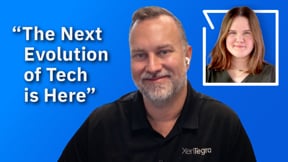
Video: How World Wide Technology and NVIDIA Can Jump-Start AI Apps

Transcription

hey Channel insiders welcome back to channel Insider partner POV I'm your host Katie boso and my guest today is Tim Brooks managing director of data analytics and AI at worldwide technology the global solution provider is currently working with technology vendor and Chip giant Nvidia to equip Enterprise developers with new Nvidia Nim AI agent blueprints to jumpstart the creation of AI applications so what can you do with These Blueprints who should be building off of them and what does wwt bring to the table as a partner let's get into it welcome Tim it's great to see you hi Katie great to be here thank you thank you so much this is a really exciting subject because obviously when we talk about AI everybody has something to say but I really view you as wwt's God father of AI in this subject so I think I'm talking to the right man when it comes to anything AI based but specifically today we're talking about wwt working with Nvidia to launch the Nim agent blueprints for those AI applications that developers will create first of all tell me a little bit about what those are I'd like to hear in your own words what exactly are These Blueprints sure well it's an important question so let's start at the beginning Nim stands for n stands for NVIDIA inference microservices these are containerized so containerized means easier to Plug and Play aspects of AI that work together in order to solve domains of problems so for example Nvidia everyone knows them as a large chip manufacturer of gpus has actually pivoted its business model so it does more than just chips Nvidia now is you can think of them as an AI platform company they've really organized an ecosystem an important part of that is software and that software runs AI for organizations to help them scale and simplify how AI works together that's the part for agents so Ai and agents what is an agent it's where we delegate Authority or actions in this case Nvidia has put together what they call nim AI agent blueprints so this is the working model the architecture the containers the microservices that help AI in certain domains so the first three that were released by Nvidia and worldwide was one of the very first organizations to get our hands on it were around PDFs we all use PDFs and doing PDF analysis another one was around their digital human which many have experienced which they're calling James and of course the digital human can be adapted for any environment or put anyone in it it could become Katie for example or Tim in terms of what it's used for and how it's used and it's an actual physical representation of a human it's digital digital of course it doesn't really exist but it answers questions about a certain domain and it's it's very very useful wwt has already put one of those into action shown it to customers and we did that within three weeks of getting those blueprints so we're very excited about that and then the third one they've released is for molecular research and this is this Suite of of products they have called biion Nemo and without getting to technical what it means is those people that are doing molecular research typically Pharma companies or independent companies affiliated with pharmas are busy reorganizing molecules looking for the right combination to solve real world human or Veterinary problems that will help you know everybody and that's a very dense deep learning sort of thing that typically is very complex and very unique what Nvidia is doing with this and they they intend to roll out more my understanding is monthly is really adapting these microservices into generative AI models some of them are models that Nvidia have built some of of them are models that are open models that Nvidia has adapted in order to create these AI agent blueprints so think of it as a sort of a user manual working product that you can plug into your domain you can customize microservices and containers help you customize it to your needs essentially helping make AI more scalable and easier for Enterprises I brought up a little story before we started recording today about James the Nvidia digital human that I went and asked asked him hey do I pronounce it n or Nim just specifically what would you say and he goes It's pronounced Nim not n and just the intelligence level of what I got a response as was so startling to me so I can say for sure James is very polite he didn't make me feel bad about the mispronunciation but just thinking about that level of intelligence that's offered and the detail that James has just in his features and his Expressions thinking about how it only took you about 3 weeks to launch a similar digital human how long would that have taken you if these AI agents didn't exist yet oh boy uh full court press a number of of different people working on it including software Engineers data science data Engineers pipelines putting all that together would have been on the order of months um in the previous Paradigm and then of course there would have been a testing phase there's more reliability and and thus scalability in this example so ours we customized and we took from James to make James into Ellie and Ellie is a female represent presentation but we Cobble together different sort of ethnicities into Ellie and thus Ellie is all things to all people digitally and is very very helpful and we pointed Ellie at a series of trusted Source documents and this is through something called retrieval augmented generation called rag rag entered the vocabulary about a year ago and what that is is a means of a large language model llm to access trusted documents so it doesn't hallucinate and it's only in answering questions that it's been pointed toward and using its linguistic and visual capabilities with almost no latency I think that was your experience with James almost no latency there was no delay in the movement of the lips the eye contact all of that through that we did the same with Ellie but Ellie answered questions out of documents that we know to be true that we use every day so for example if we had asked Ellie a question about oh answer the you know who won the War of 1812 it would have answered at all would have said I'm sorry that's not in my in my domain that's not something I can answer but it's pointed at those documents that we know to be true and this is a way for Enterprises to resolve the hallucination problem it's a way for them to drisk the sort of outputs you know call it brand reputational risk that a customer facing application would would have so as a digital human most of the use cases for something like James or in our case the customization of it to Ellie is around answering questions about our product and services so that a customer could more easily answer their question the old model would have been let's Point them toward an FAQ well an FAQ doesn't answer all of my questions it answers the questions that most often come up in this open-ended model an llm uses its ability to go into the source documents they could be engineering documents they could be customer service documents they could be documents about pric and only retrieve those results which it's been pointed toward and this really changes the use of generative AI for many organizations that have been risk averse for the right reasons it now gives them a safer way to use AI this sounds like a souped up version of chatbots to me would that the intention be to replace something of that level to give a more human experience to the users I think it's definitely a yes but it's a more human experience so if we think about chatbots traditionally they have had rules based so they're pre-populated with certain answers in the old model and they are only access accessing that information and if it goes off of that it's like Oh we must escalate you to a human or sorry I can't answer your question and most of our experience with chat Bots have also been very much type in and you get another text answer and I've spoken to Ellie both in English and in Spanish and Ellie recognized without me saying I'm going to speak in Spanish it recognized the Spanish and answered me back in Spanish so this is all very I mean way better than a chat bot this recognizes what you're speaking and responds fact this is all embedded in the Nim AI agent blueprint so in other words it's simplifying and taking away a lot of the complexity of putting together if you think about it which data should I access what does that data pipeline look like what language do I answer in what am I answering what is the question what's the reasoning between synthesizing multiple documents in my source data and spitting that back out to a human that's far superior to a chat bot now its initial use case may replace are augment the way chat Bots are used but I do think that it that it really has far more powerful uses than just the chatbot example you're going to go to a drive-in quick service restaurant of some type and you as you approach the menu you just simply you know look at the menu and then you you ask and it responds back well you might not replace all of your human order tickers that way but it certainly could augment the service and how your customers are interacting with you so these are these are some of the ways we're actively involved right now with customers in implementing these Nim AI agent blueprints it also definitely rings a bell for me in in seeing this as something that can be more friendly to differently abled people people who have disabilities or who have harder eyesight or hearing or anything where they're having a harder time with those typing chat Bots that seem to be very linear you have to type things in or you have to press one for Spanish you have to kind of go along through this whole list of directions before you can get to the point of finding out the question of what you want so moving on from there I I also want to consider the timeline that you were saying changes up when we discuss these new blueprints thinking about that does that mean the jump start that These Blueprints can give developers allow for greener or less mature developers to be able to have an easier time creating their own AI applications or is it something where you really still need that expertise of a a learned human who knows exactly how to work with one of these models that's a great question and and it's one we get quite a bit I do think that initially you want your experienced seasoned developers working on them but what we have seen worldwide let's put the uh Nim AI agents aside for a minute sure our same developer teams that were working on rag models right retrieval augmented generation which is an llm pointed at trusted documents initially we built an app for knowledge share and then we've since replicated this for customers they took a good five or six months including some false starts in order to really get their footing and make it trustworthy and a sound application that was scalable and and highly usable and it's now used by thousands of people internally at worldwide as well as we built them for customers as well the second one probably took like five months but the applications we built internally numbers three through nine now I think we're going on nine and the ones we have built for in the customer seat the same way there's a flywheel effect in the learning so my my suggestion would be for your first AI agent blueprints you really do want either season developers and we have them or your own season developers to use them but then going forward I think you'll find there's a flywheel effect in terms of using them faster and more often and organizationally you'll also see a flywheel effect in both adoption and with that return on investment and that's an important aspect that enterprises are asking all the time is like how do I calculate the ROI where is the ROI what is the ROI and that's a that's a very important question and I think that what you see if you do this right is you build trust by using your seasoned people for the first couple of AI applications including the Nim AI agent blueprints but after that that trust becomes more widespread you're going to find that they're easier and easier to build now the the vision and I've heard this this is public the vision that Nvidia has and Jensen has articulated that you know within the next I don't know four to five years most of us have our own sort of digital twin AI agents doing things on our behalf so Katie you can look forward to another twin of yourself digital doing a lot of the things that you do that that maybe you want to do other things that are less menial to in in whatever that may be to you and delegate those to your own AI agent I would welcome that but that is something to consider because that has to do with how people evolve how organizations use it what is the ROI for Enterprises is one the other what's the human impact and we can't neglect that that's an important part of it and as we rescale upskill however you want to call it people to use Ai and look at the same way that you know many people use Excel for example we all use Excel we all use PowerPoints but back in the day you know in the in the 70s let's say what did you do if you were a financial analyst you used a lot of white out is what you did right and now we have Excel so Excel was originally well this will make the life of financial analyst easier but really what it's done is has made us all into Financial analysts so think about AI in a similar framework AI for for example contact centers and chat Bots yes we've mentioned that with James and and our version Ellie but really what it does is it can make everybody into some version digitally of themselves to be consumed by their customers colleagues whatever it may mean now I know it sounds like sort of Science fictiony and it's out there like a few years but that truly is the vision that's been articulated by Jensen in terms of where they're going and what they want to do now let me be clear I think the world won't subject them to another version of myself in addition to me there I think there can only be one but I do see this very useful internally having a digital twin there Tim AI elicits a lot of nervousness right now thinking about what can we put into it as far as data and privacy and being really concerned on that level so I do want to make sure I ask how are data privacy and security taken into account with these new AI agent blueprints or are they is that up to us to to figure out as we're using them that is up to us that is up to the Enterprise to figure out they are a tool that can be used very successfully or there's tool that can be misused so what you always want to weave into this is a what we call responsible and secure AI so you hear a lot about responsible AI I think secure AI is equally important so we call it responsible and secure AI we weave it that into every single one of the applications that we've developed for customers and it's important from the very beginning for example if you're in a regulated industry even though AI regulations are still at this stage ambiguous and vague aside from Europe where they they've become much more concrete but in the United States uh they're still a bit ambiguous so what that means is you you are subject to regulation but you just don't know what the regulations will be you know you're in a regulated industry and youve responded to Regulators before think about it the way you would think about giving a human access to that information would it be appropriate would it be safe would it be auditable and how would that impact how you respond to Regulators should they ask for what is the intent of the model what personally identifiable information did you use uh if you're in the the healthcare field how did that comport with hippo regulations all of those are things you need to think through and those are significant I think that the the models themselves are a blank slate a tool very useful for us to use how we use it and what we train it on what we restrict it to is our decision that's got to be made very thoughtfully with responsible AI secure AI principles in place so I want to talk more about wwt in this context of you're working with Nvidia so talk to me about the added value of an Enterprise is working with wwt to be able to get some of these blueprints inhouse for their developers to work with how do you add value to this already really cool concept of These Blueprints where does wwt come in we're very proud and we're privileged to have been selected by Nvidia uh the last seven years in a row as their AI Enterprise Solutions partner of the year and really what that means is we've got a great deal of familiarity and success with implementing Invidia solutions could be software it could be you know and most of the time it's like supercomputing environments and integrating that building up things like Federated learning networks Edge compute inference all of that is stuff that we're familiar with where do we add value well Nvidia really is partner forward Nvidia wants Partners to be that connection tissue between how their hardware and software works and how the customer wants to use it so that customization of it that reliability that ability to integrate it into different purposes that each customer will be slightly different even if you're all in life sciences the different life sciences companies will have slightly different needs for it even if you're in retail you'll have slightly different needs and this is where worldwide comes in so we're able to do that because we've got a lot of experience a lot of people dedicated to it we've got a couple thousand people people now trained in Nvidia AI Solutions including like 400 I like to call them ninjas trained AI advisers who went through serious boot camps at nvidia's headquarters with Nvidia team in order to get special training and special skills the other way that customers and Nvidia connect at worldwide is through our AI Proving Ground so this is a $500 million investment by worldwide in all of the latest both Nvidia technology and other adjacent OEM Technologies that customers will need in order to show how the technology Works test and drisk their investment before they make the investment in Nvidia That's Unique only worldwide has this it's a working laboratory that's used by Fortune 200 customers for their own you know determination of how they go forward it's both Labs it's training with learning paths and it is a way of them saying hey we're thinking about the following reference architectures and want to compare them how do we do that without actually taking weeks months to get that infrastructure into our own environment and then what does testing look like well worldwide does thousands of those a year and we've had this capability through our Advanced Technology Center for a good 15 years now the AI Proving Ground is about a year old and it will continue to grow with us with the latest Nvidia technology and other Technologies this is how we partner with Nvidia is to help our customers with both the software the customized outcomes that they need for their business as well as a consideration of how what the best way to have this infrastructure work how much should we buy how does it scale you know what's the power and cooling going to be all those sort of important questions worldwide helps our customers with all of it well Tim thank you so much for your time today and just as we go out I'd love to know if I'm an Enterprise listening to this podcast or watching this video right now what can I do to start working with wwt to get my hands on These Blueprints you can go to our AI Proving Ground and poke around and it's a great way to learn about it you can reach your wwt contact or rep or you can simply go to wwt and ask for either a guided tour of how we can help you and our team of several thousand people will be happy to assist you in that Journey Tim thank you again for your time today and I look forward to having this conversation again as digital twins in 18 to 24 months thank you Katie great to be with you thanks so much to Tim for joining me today and thank you for watching or listening you can check out all episodes of Channel Insider partner POV on Channel insider.com or watch on youtube.com/ Channel Insider news and Trends don't forget you can listen to us as a podcast as well on your favorite podcast listening platform like subscribe and follow wherever you can to never miss an episode come connect with Channel Insider on LinkedIn or X Channel Insider or With Me @ Katie boso once again I'm your host k boso and I'll see you next time

This transcript was generated automatically from the video's captions and may contain errors.

Tim Brooks explains how global solution provider WWT is bringing new NVIDIA NIM Agent Blueprints to enterprise developers.

Written By
Katie Bavoso
Katie Bavoso
Oct 23, 2024
1 minute read
Channel Insider content and product recommendations are editorially independent. We may make money when you click on links to our partners. Learn More
Katie Bavoso

Katie Bavoso is a 2017 Regional New England Emmy-nominated broadcaster with over a decade of professional content creation, production, hosting, and interviewing experience. Starting her career off in TV news, she pivoted to the IT channel to help connect vendors, solutions and services providers, and IT buyers through exciting video content and storytelling. Katie is now the host of Channel Insider: Partner POV, a video and podcast series shining a light on the most innovative solution providers of the IT channel.

Channel Insider Logo

Channel Insider combines news and technology recommendations to keep channel partners, value-added resellers, IT solution providers, MSPs, and SaaS providers informed on the changing IT landscape. These resources provide product comparisons, in-depth analysis of vendors, and interviews with subject matter experts to provide vendors with critical information for their operations.

Property of TechnologyAdvice. © 2026 TechnologyAdvice. All Rights Reserved

Advertiser Disclosure: Some of the products that appear on this site are from companies from which TechnologyAdvice receives compensation. This compensation may impact how and where products appear on this site including, for example, the order in which they appear. TechnologyAdvice does not include all companies or all types of products available in the marketplace.