






“Nehalem
and Smackover” may sound like the stars of the latest TV police drama,
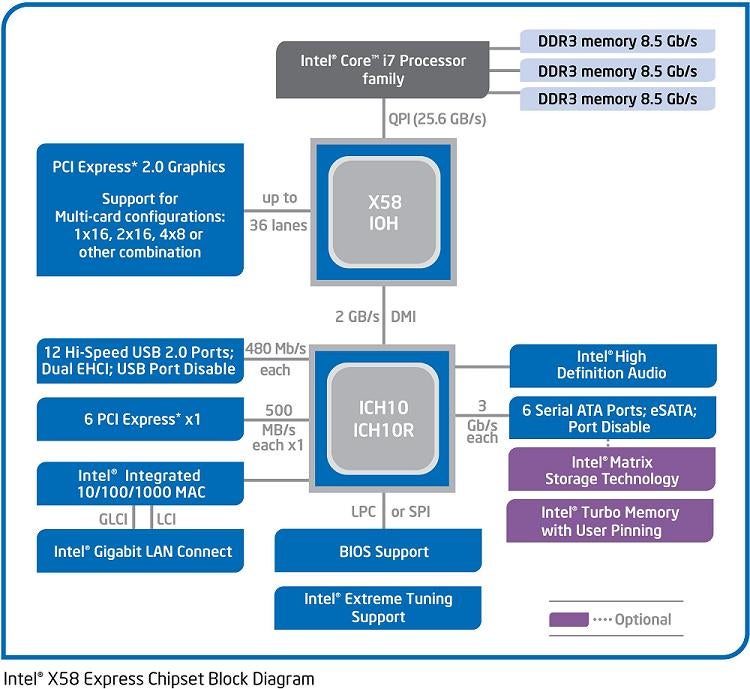
but this dynamic duo from Intel — the Intel Core i7 CPU and Intel X58
Chipset — is headed straight for the desktop. Intel is hoping that
users looking for the highest performance possible will want the
Nehalem CPU and Smackover Chipset to star in their desktop PCs and
workstations. Hopefully, solution providers and system builders will be
able to leverage that star power into increased sales and profits.
Due
to be released by the end of November 2008, Intel’s Core i7 CPU (code
named Nehalem) and the X58 Chipset (code named Smackover) bring higher
performance to desktop PCs, workstations and servers. Intel has
integrated several design tricks to bring more performance to the 45
nanometer architecture, mostly by adding an integrated memory
controller and a new interconnect (point-to-point protocol) called
QuickPath Interconnect (QPI), somewhat similar to what AMD has been
doing with Phenom and other processors. That is not to say that Intel
has been playing catch-up with AMD, but more likely adopting a proven
technology that is known to enhance performance.